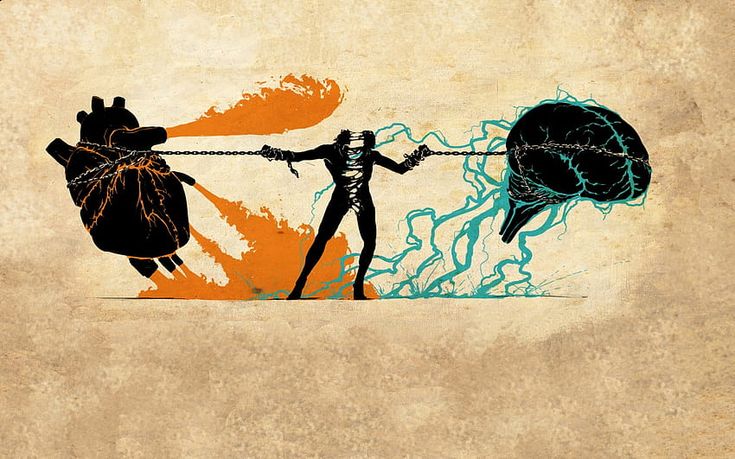
Emotion vs logic decision making is rarely as rational as people believe. Most choices begin with emotion, while logic often follows later to explain or justify what already feels right or wrong. Understanding how emotion and logic interact reveals why people make decisions that contradict their intentions, values, or long-term goals.
Understanding how emotion and logic actually work together does not make people irrational. It makes them human. When this process is understood clearly, individuals can make better decisions, communicate more effectively, and reduce unnecessary self-criticism.
This article explores how decisions are truly made, why emotion plays the leading role, and how logic fits into the process in a healthy and balanced way.
Emotion vs Logic in Decision Making: Why Feelings Come First
The psychology that humans make decisions purely through logic is largely a cultural myth. While logic is valuable, it is not the brain’s starting point. The brain evolved for survival, not objectivity. Emotional systems developed earlier than rational ones and remain faster and more influential.
When people say, “I knew better, but I still did it,” they are describing a mismatch between emotional processing and conscious reasoning. The decision did not bypass logic — logic simply arrived too late to take the lead.
Logic is effortful. Emotion is efficient. The brain defaults to what conserves energy and maintains emotional stability.
When Logic Fails Without Emotional Safet
Before logic evaluates options, emotion filters experience. Emotional centers of the brain rapidly assess situations for relevance, safety, and reward. This process happens in fractions of a second and determines what information even reaches conscious awareness.
Emotion influences:
-
What captures attention
-
What feels important
-
What feels risky or safe
-
What feels aligned or uncomfortable
If something feels wrong emotionally, logic often works overtime trying to justify avoidance. If something feels right, logic tends to support it.
This is why facts alone rarely change minds. Information that conflicts with emotional beliefs is often dismissed or reinterpreted rather than accepted.
Why Emotion Feels More Convincing Than Logic Psychologically
Emotion carries certainty. A feeling does not need evidence to feel real. Logic, on the other hand, requires analysis, comparison, and effort.
From a psychological perspective, emotions evolved to guide rapid action. In uncertain situations, emotional signals helped humans respond quickly to threats or opportunities. This evolutionary advantage still shapes modern decision-making.
For example:
-
Fear may override logical risk assessment
-
Attachment may outweigh rational evaluation
-
Desire may minimize perceived consequences
Emotion narrows focus, while logic broadens it. Under stress, emotional dominance increases and logical capacity decreases.
😎Quick Read
| The Psychology of Consumer Behavior in 2026: How to Influence Buying Decisions |
The Role of the Nervous System in Choice
Decision-making is not just cognitive — it is physiological. The nervous system plays a major role in how choices are made.
When the nervous system is regulated:
-
The brain has access to reasoning
-
Perspective expands
-
Long-term outcomes are considered
When the nervous system is dysregulated:
-
Decisions become reactive
-
Short-term relief is prioritized
-
Logic becomes rigid or inaccessible
This is why people make different decisions when calm versus when overwhelmed. It is not a lack of intelligence — it is a shift in physiological state.
Logic as the Interpreter, Not the Originator
Logic often serves as a narrator rather than a driver. After an emotionally driven decision is made, logic steps in to explain it.
This process is known as post-rationalization. People create logical explanations that align with emotional outcomes, often without realizing it.
This does not make logic useless. Logic provides structure, evaluation, and refinement. But expecting logic to override emotion without addressing emotional input is unrealistic.
Healthy decision-making integrates both systems rather than forcing one to dominate.
How Past Experience Shapes Emotional Decisions
Emotions do not arise in a vacuum. They are shaped by memory and experience. Past outcomes influence how current options feel.
For example:
-
A past failure may trigger fear around opportunity
-
A past loss may increase emotional caution
-
A past reward may create emotional attachment
These emotional responses occur automatically. Logic may recognize that circumstances are different, but emotion responds as if the past is repeating.
This is why people sometimes feel stuck making the same choices — not because they lack logic, but because emotional memory is guiding behavior.
Why Knowing the “Right Choice” Isn’t Enough
Many people experience frustration because they know what the logical choice is, yet feel unable to act on it. This gap often leads to self-judgment.
The issue is not knowledge — it is emotional alignment. If the emotional system does not feel safe, ready, or supported, logic alone will not create action.
Change requires emotional readiness, not just intellectual understanding.
Integrating Emotion and Logic for Better Decisions
The goal is not to eliminate emotion from decision-making. Emotion provides meaning, motivation, and values. Logic provides evaluation, structure, and foresight.
Healthy integration looks like:
-
Recognizing emotional input without being ruled by it
-
Using logic to assess outcomes, not suppress feelings
-
Pausing before action when emotions are intense
-
Making space for both intuition and analysis
When emotion is acknowledged, it becomes less disruptive. When logic is respected, it becomes more effective.
Practical Awareness in Everyday Decisions
Improving decision-making begins with awareness. Simple practices can shift the balance:
-
Notice emotional states before deciding
-
Delay decisions during heightened emotion
-
Ask what the emotion is protecting or signaling
-
Use logic to explore consequences, not deny feelings
These steps do not slow decision-making — they improve it.
Final Reflection
Emotion and logic are not enemies. They are partners in human decision-making. Emotion leads, logic refines. When one is ignored, decisions suffer. When both are integrated, clarity emerges.
Understanding how decisions are actually made reduces shame, increases self-trust, and creates space for intentional choice.
👉Understanding patterns is easier when you write them down.
The most effective decisions are not emotionless — they are emotionally aware and logically informed.
👉I recommend having a dedicated notebook for reflection when consuming psychology content.
Leave a Reply